
The Remedy Chain Reaction
How settlements can create the next market event after the headline is priced.

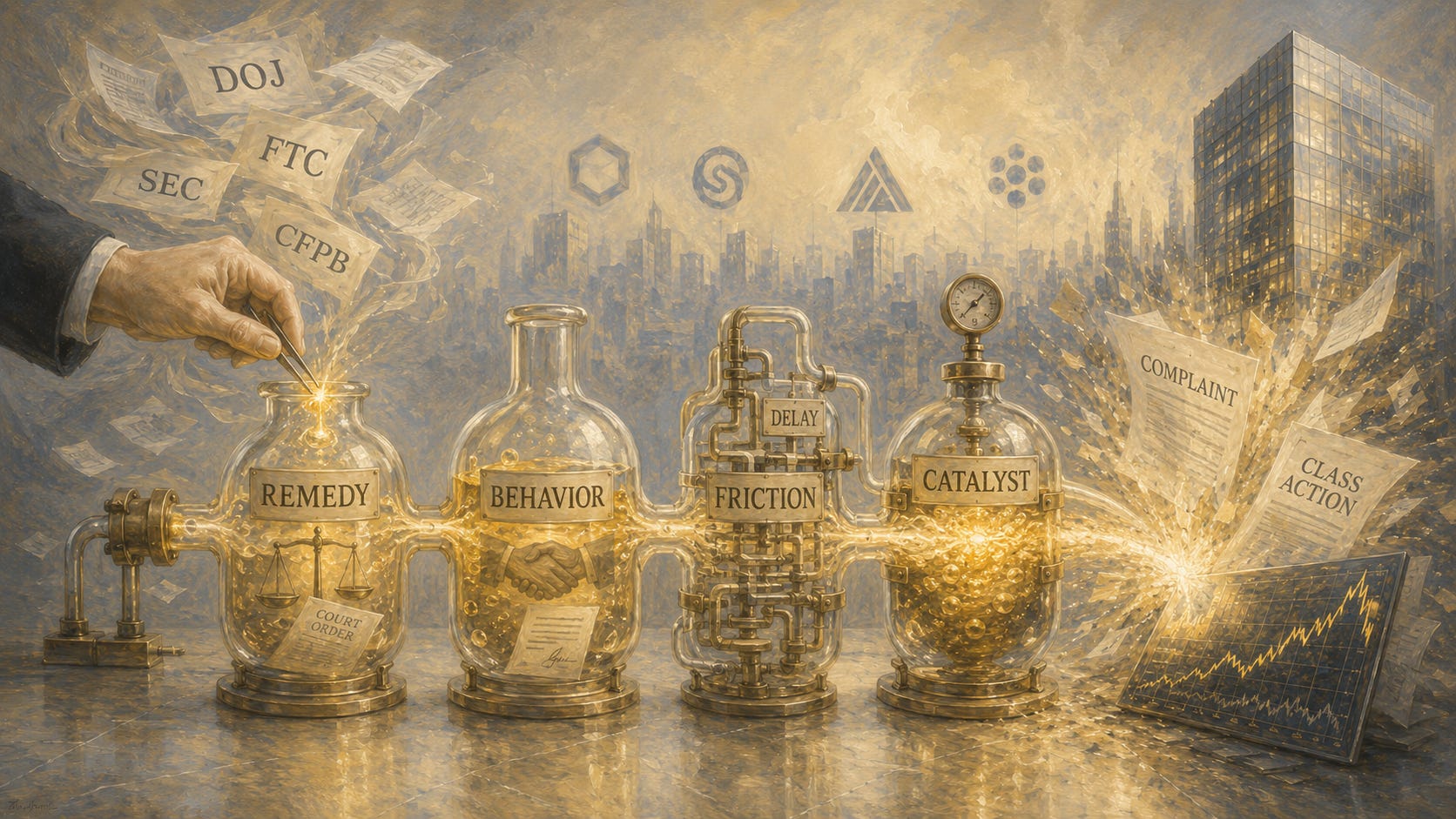
The market is usually not blind to regulatory settlements. In major cases, the first reaction is often rational: no breakup is relief, a forced sale changes the ownership case, and a manageable fine can clear an overhang if the operating model survives.
The harder question comes after the first reaction.
What does the remedy force next?
As we know a settlement is not always finished when the court order is entered. Sometimes the remedy creates a new sequence. The company has to comply. Counterparties have to decide whether to use new rights. Regulators gain a record while the company looks for a workaround and then finally, sometimes that workaround can become the next fight.
This is the part the usual noisy headlines usually miss. Not because the market is stupid. Because the first-order event is easier to price than the behavior that follows it.
Apple is the best modern example because the relevant remedy came out of Epic’s long-running challenge to App Store payment restrictions. After the court ordered Apple to loosen its anti-steering rules, the issue shifted from whether Apple had to change the App Store to how Apple would implement that change while trying to preserve its payment economics.
The Epic injunction did not break the App Store. It did not force Apple to abandon its ecosystem. It created a narrower question: how would Apple comply while protecting the economics of its payment system? Apple’s implementation then became the next legal event. Reuters reported that Apple imposed a 27% commission on certain outside-payment purchases, Epic challenged the structure, and a court later found Apple in civil contempt. The Supreme Court declined to pause that contempt order in 2026. Reuters: Apple asks Supreme Court to review contempt order Reuters: Supreme Court declines to pause contempt order.
That is the chain reaction. The remedy forced behavior. The behavior created a workaround fight. The workaround fight became the next catalyst.
Live Nation shows the slower institutional version. The relevant settlement traces back to the government’s review of Live Nation’s merger with Ticketmaster, a deal that combined a major concert promoter with the dominant ticketing platform. DOJ allowed the merger to proceed, but only under a 2010 consent decree that imposed conduct obligations instead of breaking the companies apart.
The 2010 consent decree did not break up Live Nation and Ticketmaster. It let the combined business survive under conduct obligations. Years later, DOJ moved to modify and extend that decree, then brought a broader monopolization suit seeking more aggressive relief. The old remedy became more than an old settlement. It supplied history: prior obligations, federal supervision, alleged failure, and a record that softer restraints had been tried. DOJ: 2019 Live Nation consent decree modification DOJ: 2024 Live Nation/Ticketmaster lawsuit.
That is why remedies should not be read only as legal endings. They can become catalyst generators.
The market may price the settlement correctly and still miss the sequence that follows.
How To Read This
The mistake is not failing to ask whether the remedy matters. Serious investors already ask that. The more useful question is second- and third-order: what behavior does the remedy force, and what new vulnerability does that behavior create?