
Case Brief: What’s at Stake in Musk v. Altman
Behind the billionaire drama is a harder question: can OpenAI’s founding mission become a legal limit on private AI wealth?

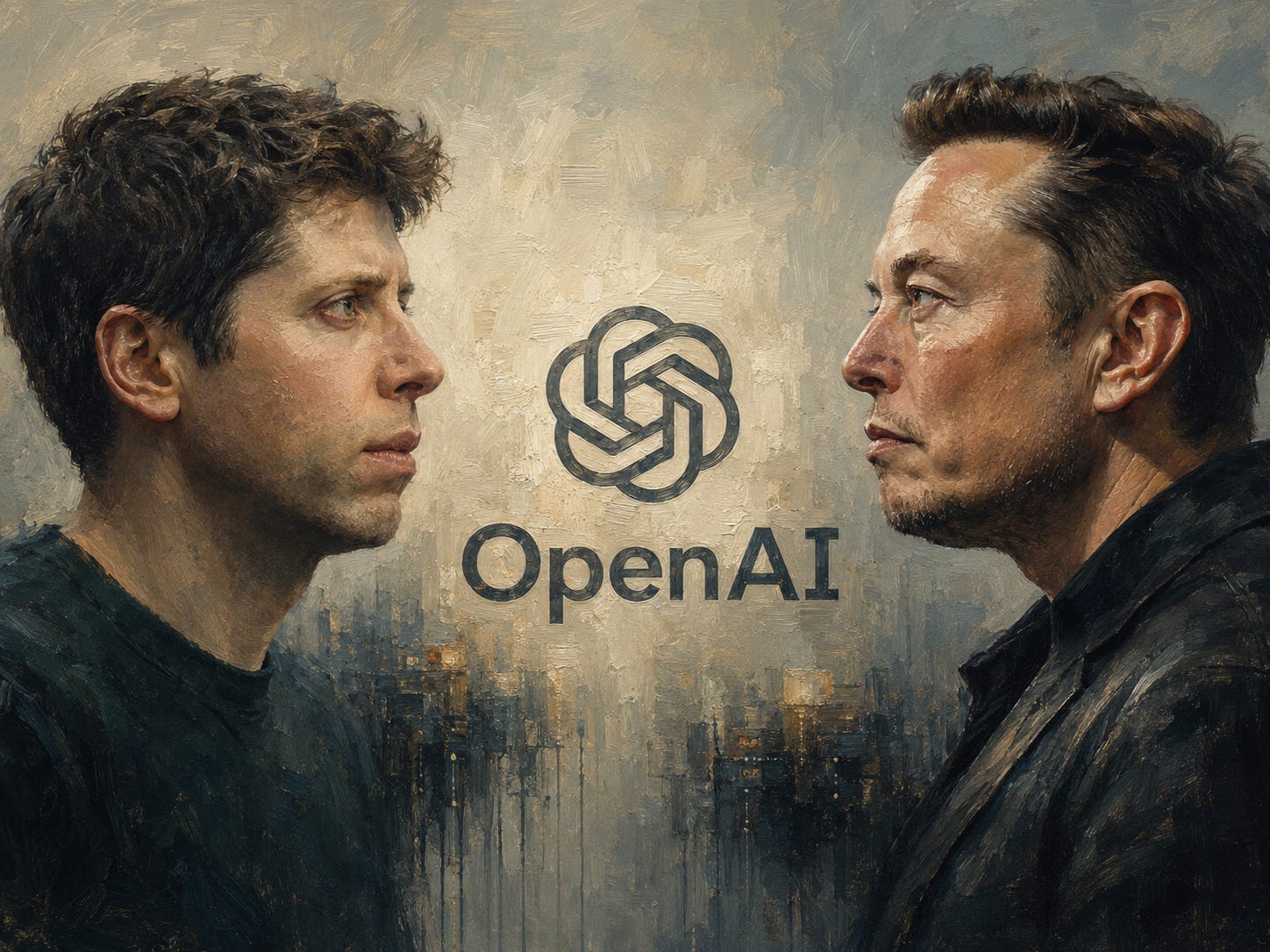
Musk v. Altman is easy to misread because the personalities are so loud.
Elon Musk says OpenAI betrayed its founding mission. OpenAI says Musk left, became a competitor, and now wants to punish the company he could not control.
That story has everything the internet likes: betrayal, ego, money, power, and two famous men accusing each other of bad faith.
It does not tell investors what to price.
The capital story is whether OpenAI’s original nonprofit mission can become a legal limit on how private AI wealth is created, governed, and distributed.
Musk is reportedly seeking roughly $150 billion in damages from OpenAI and Microsoft, with proceeds intended for OpenAI’s charitable arm. He is also seeking leadership changes and a return to nonprofit control. OpenAI and Microsoft deny the claims.
The obvious question is whether Musk wins.
The better question is whether he makes OpenAI’s founding story legally usable.
That is different.
Musk does not need the most dramatic version of the case to succeed for the litigation to matter. A narrower ruling could still create risk if it gives legal weight to OpenAI’s founding mission, donor representations, board authority, restructuring approvals, fiduciary duties, or commercialization limits.
That would not necessarily stop OpenAI.
It would create friction.
Friction is often enough.
It can slow restructuring. It can complicate investor disclosures. It can make strategic partners more cautious. It can invite copycat claims. It can force future AI companies to draft public-benefit promises with litigation risk in mind.
OpenAI was not built like a normal startup. It began as a nonprofit AI research lab in 2015, with a public-benefit mission centered on developing safe artificial intelligence for the public good. The trial now sits at the center of OpenAI’s shift from nonprofit project to one of the most valuable companies in artificial intelligence.
Mission language usually operates like corporate atmosphere. It helps recruit talent, attract capital, reassure regulators, and win public trust. It sounds noble, but markets often assume it bends when capital needs change.
Musk’s case tests whether that assumption is safe.
The trial has also made the private value question impossible to ignore. OpenAI president Greg Brockman disclosed in court that his stake in the company is worth nearly $30 billion, despite saying he did not personally invest money into OpenAI.
That makes the investor question sharper.
Can a nonprofit-controlled structure keep the credibility of a mission-first institution while enormous private value flows to insiders, employees, strategic partners, and investors?
That is the issue that survives the gossip.
What to Watch
The key is not who sounds more aggrieved on the stand.
The key is whether the court treats OpenAI’s mission as enforceable architecture or flexible rhetoric.
Investors should watch three things.
First, whether the court gives legal weight to OpenAI’s founding mission, early public commitments, donor expectations, or internal governance structure.
Second, whether the remedy discussion reaches governance, not just money. A damages award would matter. A remedy touching control, restructuring, nonprofit authority, or leadership would matter more.
Third, whether the case creates friction around OpenAI’s restructuring, strategic partnerships, investor disclosures, or eventual public-market path.
A clean OpenAI win would suggest that mission-bound structures remain flexible, even when a company evolves into a capital-intensive commercial enterprise.
A meaningful Musk win would suggest something more dangerous for the sector: that founding promises can become litigation assets.
The more realistic outcome may sit between those poles. Enough legal relevance to create friction, even without a total Musk victory.
The personalities are loud.
The precedent risk is louder.
The market usually asks who owns the equity.
This case asks who owns the mission, and whether that mission can block the equity.
That would not just matter for OpenAI.
It would matter for every company trying to convert public trust into private capital.