
Case Brief: Takeda’s $885 Million Verdict Shows the Afterlife of a Settlement
A 2014 patent settlement just produced an $885 million verdict. The warning for pharma investors is that some “settled” generic fights may still have a second life as antitrust claims.

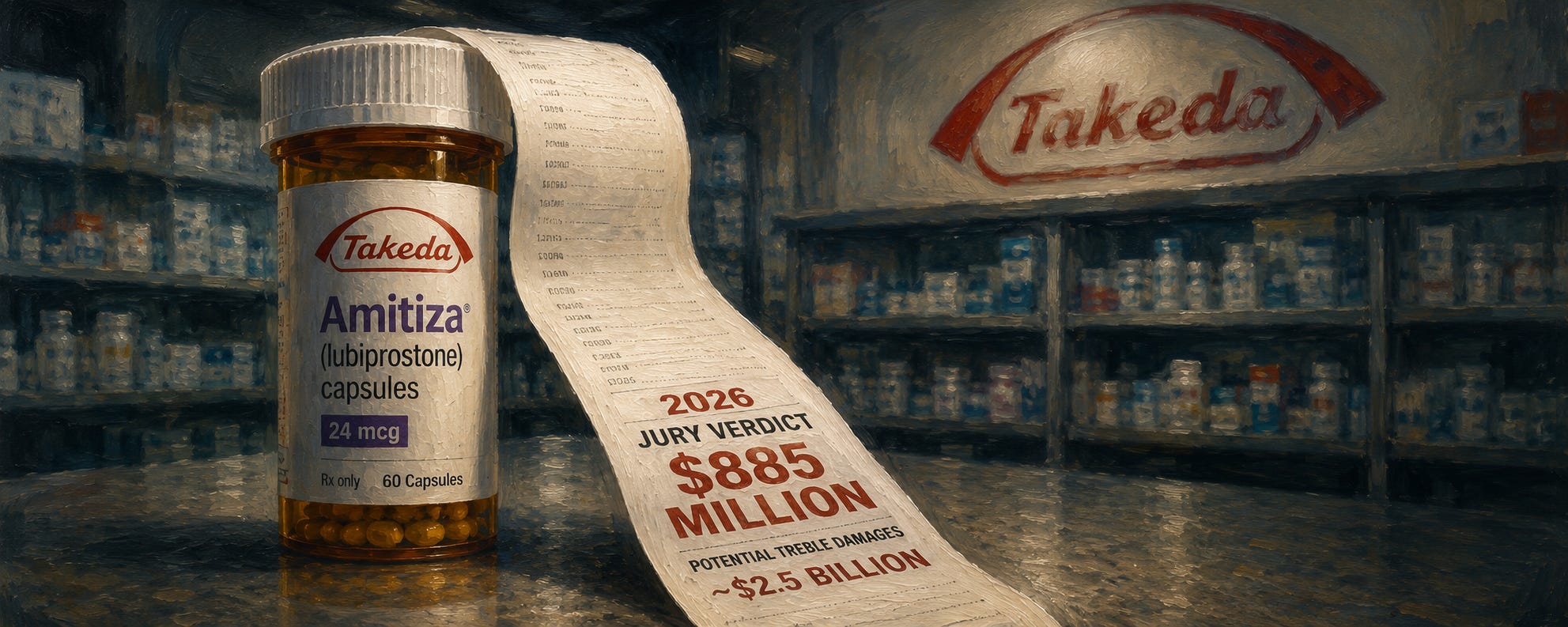
In 2014, Takeda helped resolve patent litigation involving Amitiza, a branded drug used to treat chronic constipation. On paper, that kind of agreement performs a familiar corporate function. It closes a fight. It fixes a launch date. It turns patent uncertainty into something management can model, disclose, and move past.
That is the appeal of settlement.
No board wants endless patent litigation hanging over a profitable product. No generic challenger wants to spend years fighting patents with an uncertain trial outcome. No executive wants to explain why the company gambled the economics of a major drug on a courtroom result it did not control.
Settlement offers a way out.
It takes the mess of litigation and gives it a business shape.
The problem is that antitrust law does not only ask whether a settlement ended a lawsuit.
It asks what the settlement did to competition.
That is where the Takeda verdict becomes useful.
The later antitrust case did not ask the same question as the original patent case. The original patent fight was about rights, validity, infringement, and launch timing. The later antitrust case asked a more dangerous question.
Was the agreement merely a lawful compromise over uncertain patent rights?
Or did it give the generic challenger enough economic value to make waiting more attractive than competing sooner?
That is the issue behind the $885 million verdict.